Hippo survey reveals energy-efficient cost savings is a top concern for homeowners

Your energy bill doesn’t lie. When temperatures spike–and drop–your home’s systems work harder, and the cost shows up whether you’re ready for it or not. For a growing number of homeowners, that cost is becoming harder to absorb.
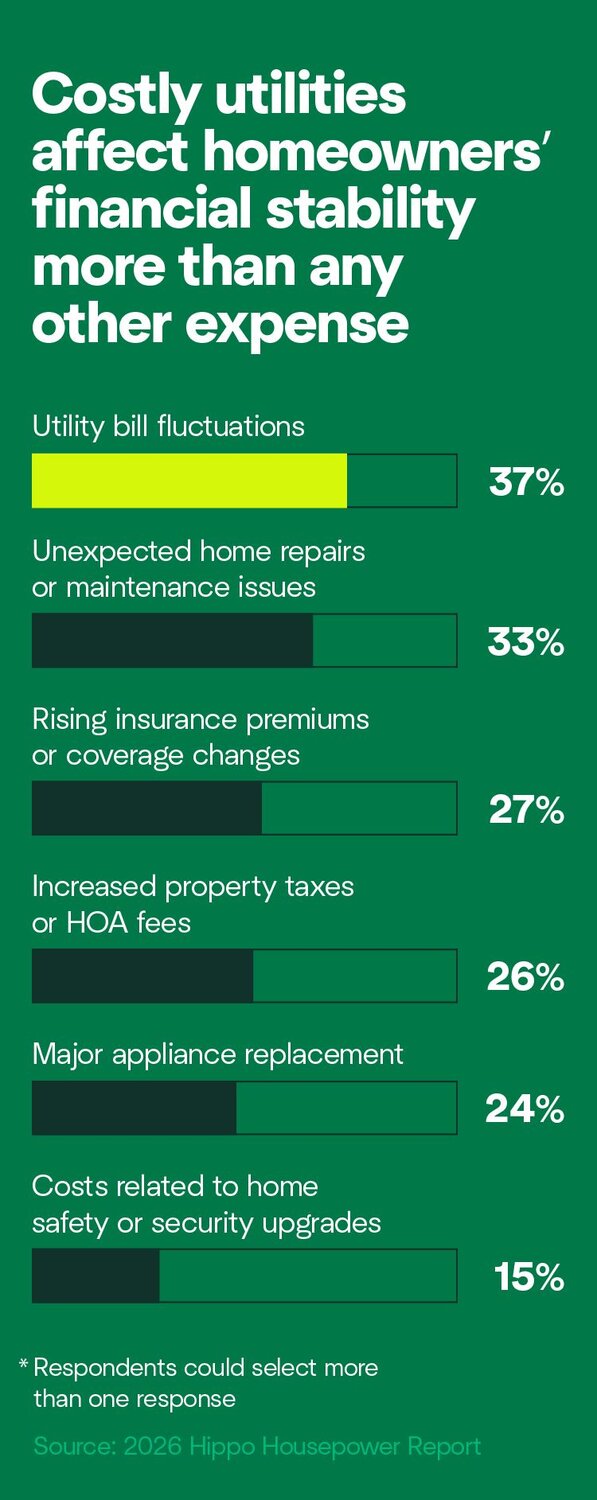
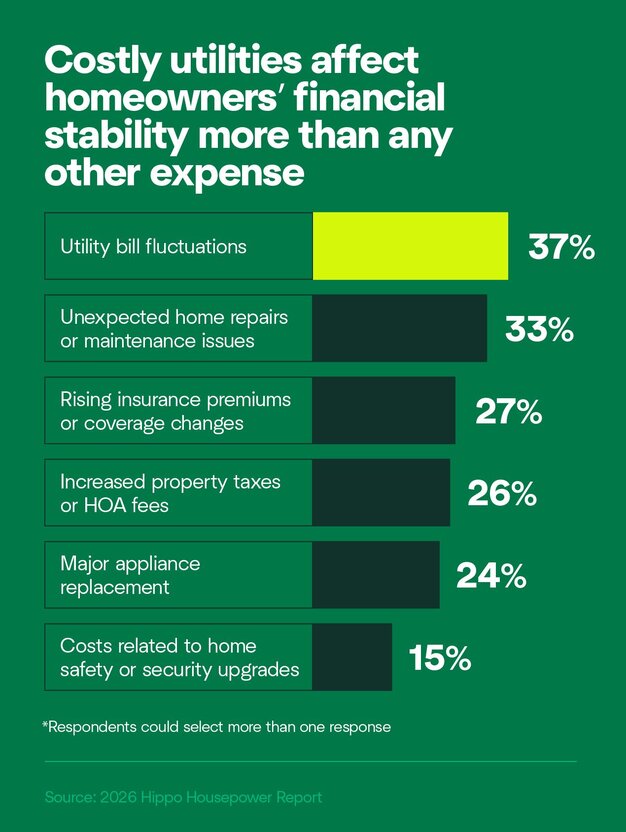
According to the 2026 Hippo Housepower Report, 37% of homeowners say utility bill fluctuations impacted their financial stability in 2025.
This new analysis of Housepower data shows how homeowners are experiencing and responding to these rising costs.
Key takeaways
- 37% of homeowners say utility bill fluctuations impacted their financial stability in 2025.
- 42% of homeowners in Arkansas, Louisiana, Oklahoma, and Texas say utility bill fluctuations impacted their financial stability in 2025.
- 32% of homeowners advise new buyers to make home upgrades to improve energy efficiency and sustainability.
- 28% of homeowners completed maintenance tasks in 2025 to increase energy efficiency and lower utility bills.
- Sustainability is one of homeowners' top concerns. 25% of homeowners say energy efficiency and sustainability became more important to them as homeowners in 2025.
Rising utility costs are making homeowners feel less financially stable
Extreme weather can drive up homeowners' utilities and maintenance costs
How small repairs now can help lower future energy bills
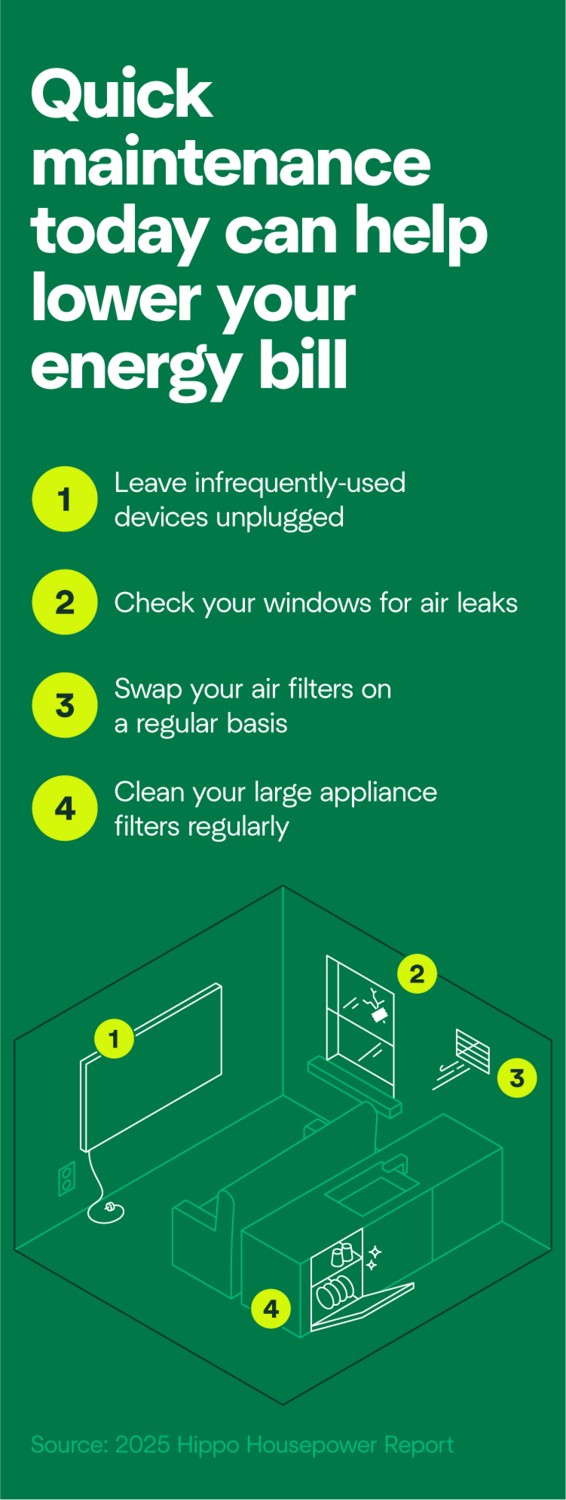
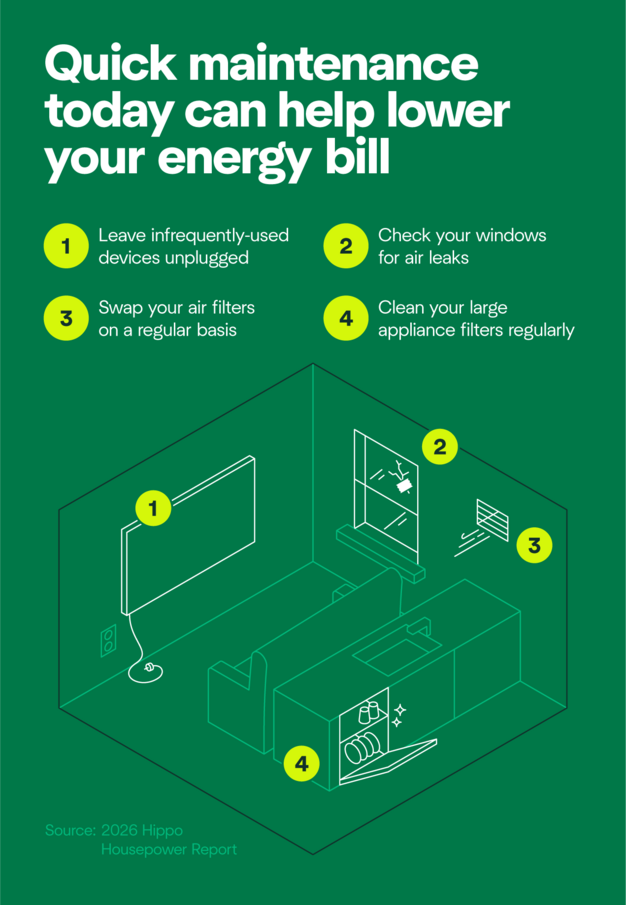
- Routine maintenance tasks: Replace air filters every 1-3 months and follow your unit's manufacturer guidelines on when to schedule regular maintenance. Dirty or clogged filters force HVAC systems to work harder, driving up energy use.
- Seal cracks and leaks: Check doors, windows, and other openings for air leaks. If you find them, seal them. Leaks make your HVAC system strain to maintain temperature, and outside moisture can damage your home if left untreated.
- Unplug unused devices: Devices draw a small amount of power even when not in use. Consider leaving devices unplugged if you don't use them daily, like game consoles, printers, or coffee makers.
- Clean major appliances: Dishwashers, washers, and dryers have filters, too. Clean them and empty the filters at least twice a year according to the manufacturer's directions. Dirty appliances use more power to run efficiently.
Energy-efficient upgrades can make it easier to use less power
- Smart home upgrades: Smart thermostats can automatically adjust temperatures, control temperatures remotely, and provide usage data.6 You can also consider smart light bulbs, which can turn off after a set time.
- Energy-efficient doors and windows: Energy-efficient windows are double-paned (or even triple-paned) and block heat from your rooms while still letting in the same amount of light.7 If you're on a budget, blackout curtains also help keep rooms cooler at a fraction of the price of new windows.
- Heat pumps: Air-source heat pumps can be installed in homes with a traditional forced-air ductwork system. They may look like AC units, but they can cool and heat more effectively than traditional heating systems.8
- Cool roofs: While a larger investment, cool roofs reflect sunlight off the roof of your house to keep your home cooler and take pressure off your AC.9
Understand future home costs with Hippo Insurance Services
Methodology
External sources
- U.S. Bureau of Labor Statistics. (2026) Average Price: Electricity per Kilowatt-Hour in U.S. City Average
- CNBC. (2025) See how much prices have increased since 2020 — in one chart
- U.S. Bureau of Labor Statistics. (2026) Consumer Price Index for All Urban Consumers: All Items Less Food and Energy in U.S. City Average
- The Guardian. (2025) Nasa data reveals dramatic rise in intensity of weather events
- Climate Central. (2025) 2025 Summer Package
- Energy Star. Smart Thermostats
- National Fenestration Rating Council. Double-pane vs. Triple-pane Windows: Which Is Better?
- Energy Star. Air-Source Heat Pumps
- Cool Roof Rating Council. What is a Cool Roof?
This article is for informational purposes only. The content reflects general homeowner considerations and is not professional advice. It also includes observed trends within the surveyed population and certain additional information compiled from sources not affiliated with Hippo. While we believe this information to be reliable, we do not guarantee its accuracy or completeness. For any insurance-related decision, please consult your licensed insurance producer.
Sources cited are publicly available and referenced in February 2026.
Related articles

Critical Home Maintenance Upgrades: 5 Best ROI Home Improvements in 2024

How To Save on Your Electric Bill: 10 DIY-Able Ways To Save This Summer

6 Weird Smells In Your House And How To Prevent Them

Multigenerational Homes: How Families Are Hacking the Housing Market

Hippo Housepower Report: Homeowners Gain Ground, Face New Challenges in 2026