16 home maintenance tasks you can do in a weekend
Summer weekends have a way of filling up fast. But for homeowners, they're also the season when tackling that growing to-do list finally feels doable — the weather cooperates, motivation is high, and the daylight doesn't run out at 5 p.m.
The good news: staying on top of home maintenance may not take as much time as you think. This guide breaks down tasks you can knock out in a few hours on a weekend — some before your coffee gets cold.
Key takeaways
- 40% of homeowners spend the majority of their yearly home maintenance budget in summer, making it the peak season for getting things done
- 47% of homeowners have put off landscaping and outdoor maintenance — the most common delayed task
- 57% of homeowners fell behind on maintenance last year, making summer a natural reset point.
- 50% of homeowners recommend scheduling and budgeting for regular, proactive maintenance before problems arise
How routine home upkeep can save money down the line
According to our 2026 Housepower Report, summer is when homeowners get to work — 2 in 5 spend the bulk of their annual maintenance budget between June and August. Landscaping and outdoor upkeep top the list of tasks people want to tackle (47%), and it's easy to see why: longer days and better weather make outdoor projects more approachable.
That said, not every task is glamorous. Keeping up with regular maintenance and budgeting for future repairs is one of the best ways you can avoid needing to make major repairs later. Half of homeowners recommend scheduling and budgeting for regular, proactive maintenance before problems arise.
Owners of older homes know how valuable proactive maintenance is. Among homeowners with properties built in the 1960s, 44% reported unexpected repairs damaged their financial stability, compared to 28% of those in modern homes.
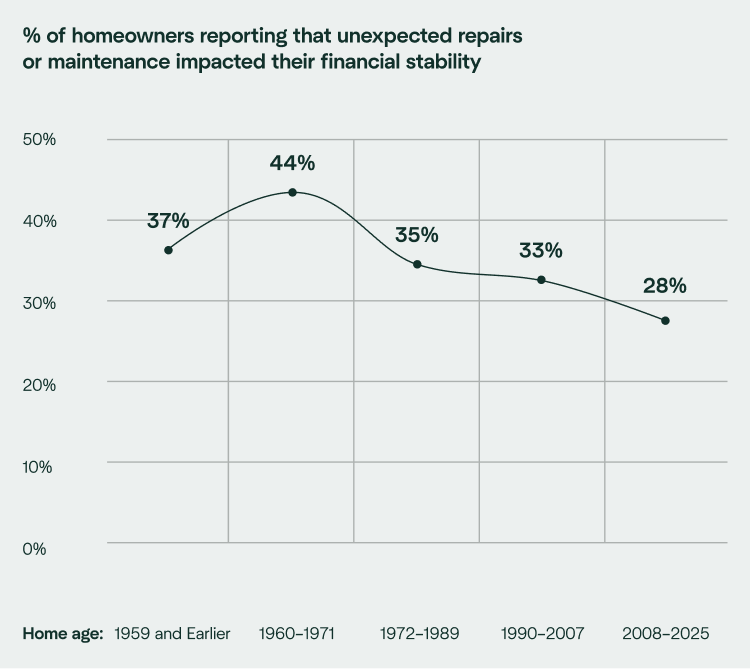
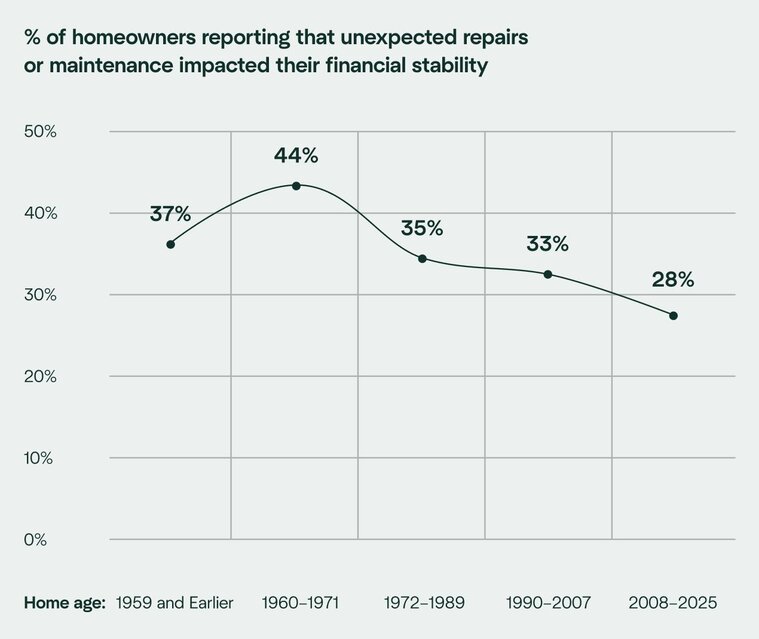
Today, nearly half of owner-occupied homes were built before 1980.1 Saving money for home maintenance will be more important as Americans' homes age. Generally, homeowners are advised to save between 1% and 4% of their home's value each year for maintenance and repairs. For example, if someone owns a $300,000 home, they should aim to save $3,000 to $12,000 each year for maintenance. They're advised to save 3% to 4% if they own an older home.
The good news is if you have a spare weekend — or even a spare hour — you can get a head start and cross these tasks off your to-do list.
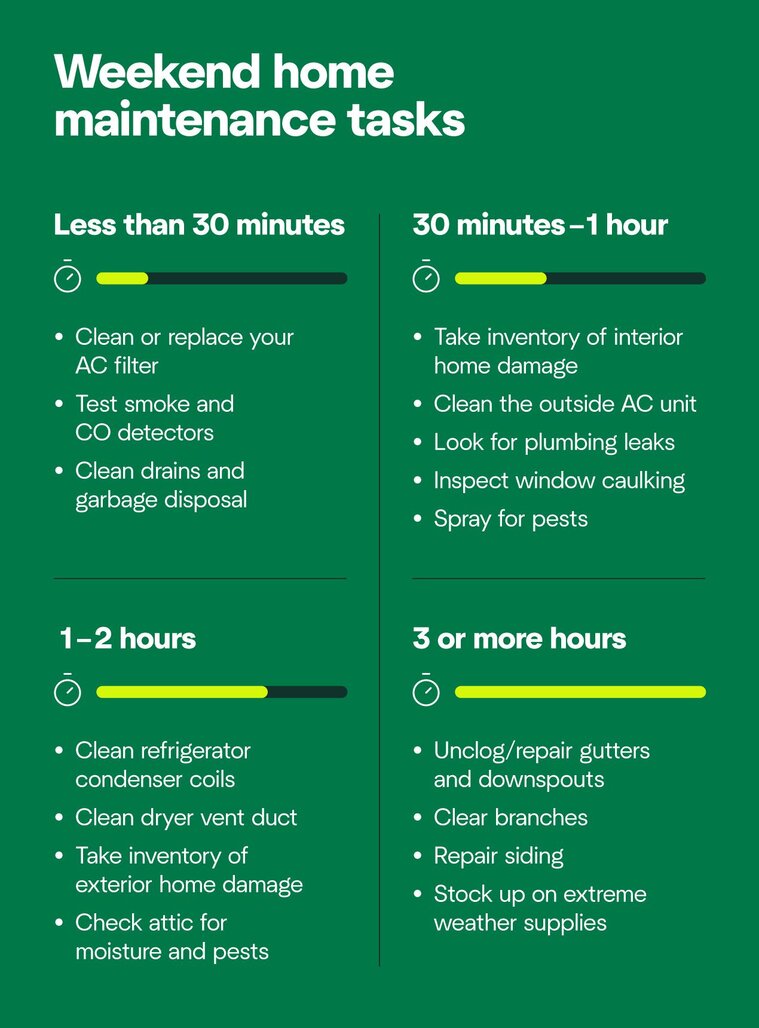
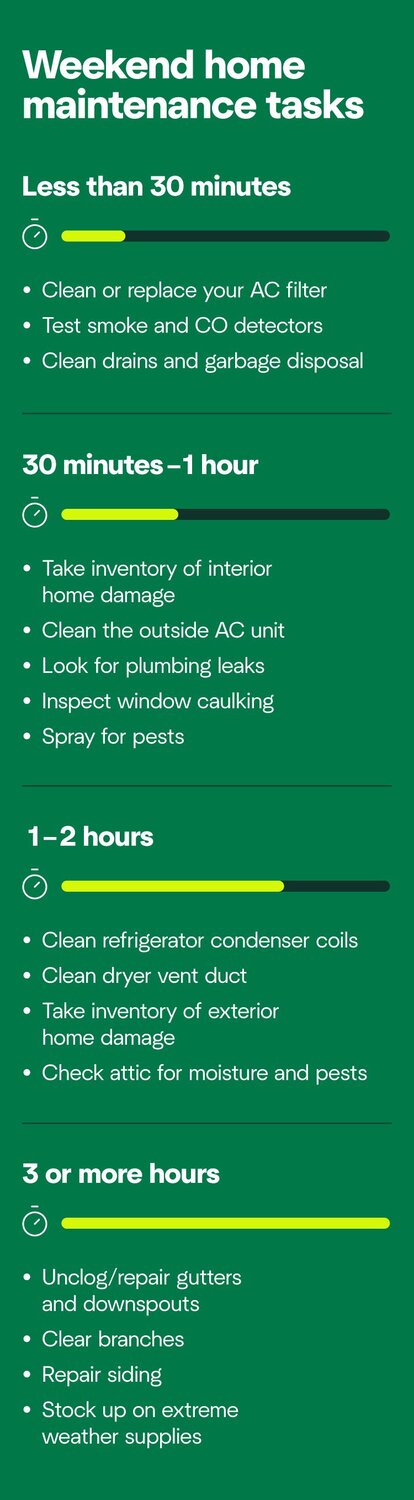
DIY maintenance tasks in 30 minutes or less
Start with your HVAC filter. If needed, a replacement runs about $10 to $50 at any hardware store and takes around 15 minutes or less to swap,2 and it's one of the highest-return maintenance tasks you can do. Neglecting your filter forces your system to work harder, which drives up your electric bill and can lead to overheating. HVAC repairs can cost between $350 and $900. Homeowners insurance may cover certain HVAC repairs, but most policies exclude general wear and tear — another reason routine maintenance matters.
If your filter is already fresh, here are a few more quick tasks worth checking off:
- Test smoke and carbon monoxide (CO) detectors. ($5 to $15 for replacement batteries)3 Use your detectors' test buttons to make sure you don't need to replace batteries or the entire unit.
- Clean your drains and your garbage disposal. (About $5 for a drain snake)4 Debris, grease, and soap build up over time in your kitchen sink. Flushing your drains with an enzymatic cleaner can help avoid long-term damage.
DIY maintenance tasks in 30-60 minutes
If you have about an hour, walk through each room and note any damage you haven't addressed — or haven't noticed before. Check walls, baseboards, floors, and windows for mold, cracks, peeling or bubbling paint, and other visible issues. A quick visual sweep is all it takes.
Catching damage early can save you significantly later. Water damage restoration averages around $3,864 and can reach as high as $16,000, depending on the extent of the damage.5
A few other tasks worth adding to this window:
- Clear debris from the outdoor AC unit. (Free) All you need to do is clear leaves and give the outside a rough wash with a hose. Blocked airflow forces it to work harder and may shorten its lifespan.
- Look for signs of leaks around toilets, tubs, and appliance connections. (Free) Look for dark stains, soft flooring, or musty smells.
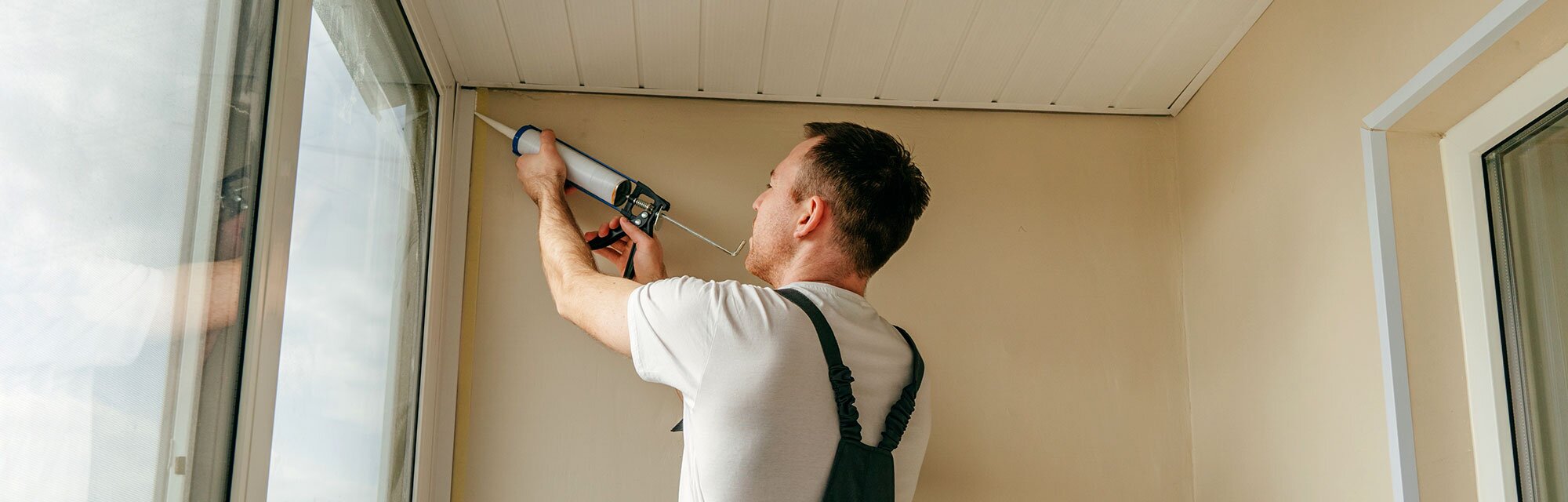
- Inspect window caulking and reseal any gaps. ($0.05 to $0.20 per linear foot of caulk)6 Sealing windows helps avoid leaks and lets your AC work more efficiently in the hot summer months.
- Spray for pests around your foundation and entry points. ($100-$600 for an exterminator, if needed)7 If you have pets or small children, consider using non-toxic spray or diatomaceous earth instead of chemical sprays.
DIY maintenance tasks in 1-2 hours
One to two hours is just enough time to tackle one minor project. Consider giving one part of your home a deep clean or doing a quick repair.
Consider any of the following fixes. If you're not sure where to find hidden components like a condenser coil or dryer vent, check your appliance's manufacturer's guide.
- Clean refrigerator condenser coils. (About $10 for a coil brush and supplies)8 Condenser coils are designed to release heat absorbed from the inside of your fridge. Dusty coils can make your fridge less efficient, which drives up energy costs and potentially shortens the appliance's life.
- Inspect and clean the dryer vent duct. (About $145 for a professional cleaning)9 This is the big aluminum tube that connects from your dryer to the wall. Dirty, dusty vent ducts can damage your appliance or even cause a fire.
- Walk the exterior and note any cracks, staining, or peeling paint. (Free) These are early signs of moisture issues and worth addressing before they spread.
- Check your attic or crawl space for moisture or pests. ($100-$600 for an exterminator, if needed)7 Check under boxes and in warm spaces for rodent and insect droppings as well as eggs. Also make sure your climate control appliances (like fans, AC, or water heaters) aren't leaking.
DIY maintenance tasks in 3 or more hours
You can still do a larger repair or cleaning job in a weekend; just consider splitting it up over the course of Saturday and Sunday. On Saturday, gather supplies and assess what needs to be done. You can complete the work the next day.
Bigger tasks are worth the effort, especially if your area faces severe weather like flooding or extreme heat each summer. Gutters, rooflines, and siding are your home's first line of defense against wind and rain. Tackling repairs before storm season can prevent costly damage down the road.
If a task involves plumbing, gas, or electrical work, consult a professional. It's worth the investment to get it right.
- Unclog or repair gutters and downspouts. ($119 to $234 to hire a professional)10 Blocked gutters can cause water damage to your foundation.
- Clear branches from rooflines and walkways. ($270 to $1,800 for professional tree trimming)11 Overhanging branches can cause serious damage to people, vehicles, or structures during a storm.
- Repair or touch up exterior siding. (About $75 for minor repairs)12 Small cracks or gaps left unaddressed can let moisture into your home over time.
- Stock up on extreme weather supplies. (Cost depends on what you already have) Make sure you have batteries, a first aid kit, water and food, and spare medications in a disaster supply kit if you live somewhere susceptible to extreme weather like hurricanes or flooding. If you have supplies already, check to make sure they aren't damaged or expired.
More resources for homeowners
Whether you've owned your home for decades or just got the keys, small, consistent maintenance habits make a real difference over time. Here are a few resources to help you stay ahead of it:
- Hippo's seasonal home maintenance checklist breaks tasks down by what you can do each month, season, and year.
- Hippo's maintenance checklists for new homeowners are a good starting point if you're still figuring out where to begin.
- The 2026 Housepower Report has more data on how homeowners are managing maintenance costs this year.
- If you're shopping for insurance, you can explore homeowners insurance options through Hippo.
External sources
- National Association of Home Builders. (2026) How Old is Today's Housing Stock?
- Angi. (2026) How Much Does an HVAC Filter Replacement Cost? [2026 Data]
- Angi. (2026) How Much Does Smoke Detector Installation Cost? [2026 Data]
- Home Advisor. (2025) How Much Does It Cost to Unclog a Drain in 2025?
- Angi. (2026) How Much Does Water Damage Restoration Cost? [2026 Data]
- Angi. (2026) What Is the Cost of Caulking Windows, Bathtubs, and More? [2026 Data]
- Home Guide. (2026) How much does an exterminator cost?
- Angi. (2026) How to Clean Refrigerator Coils Quickly and Easily
- Angi. (2026) How Much Does Dryer Vent Cleaning Cost? [2026 Data]
- Angi. (2026) How Much Does Gutter Cleaning Cost? [2026 Data]
- Angi. (2026) How Much Does Professional Tree Trimming Cost? [2026 Data]
- Angi. (2026) How Much Does It Cost to Repair Siding? [2026 Data]
Methodology
Any data referencing the 2026 Housepower Survey was collected on September 22, 2025, and conducted by Centiment on behalf of Hippo Insurance Services. The results are based on 1,619 completed surveys. In order to qualify, respondents were screened to be residents of the United States, over 18 years of age, and homeowners. Data is census-balanced, and the margin of error is approximately ±2% for the overall sample with a 95% confidence level.
This article is for informational purposes only. The content reflects general homeowner considerations and is not professional advice. It also includes observed trends within the surveyed population and certain additional information compiled from sources not affiliated with Hippo. While we believe this information to be reliable, we do not guarantee its accuracy or completeness. For any insurance-related decision, please consult your licensed insurance producer.
Sources cited are publicly available and referenced in May 2026.
Related articles

Hippo Housepower Report: Homeowners Gain Ground, Face New Challenges in 2026
Is Your Fixer-Upper a Mistake? 1 in 5 U.S. Homeowners Said Yes
The insurance coverage gap: 40% of homeowners are opting out of additional protection
Hippo's 2026 Homeowner Anxiety Report

Maintenance Checklists for New Homeowners