Condo Loss Assessment coverage: What it is and when you need it
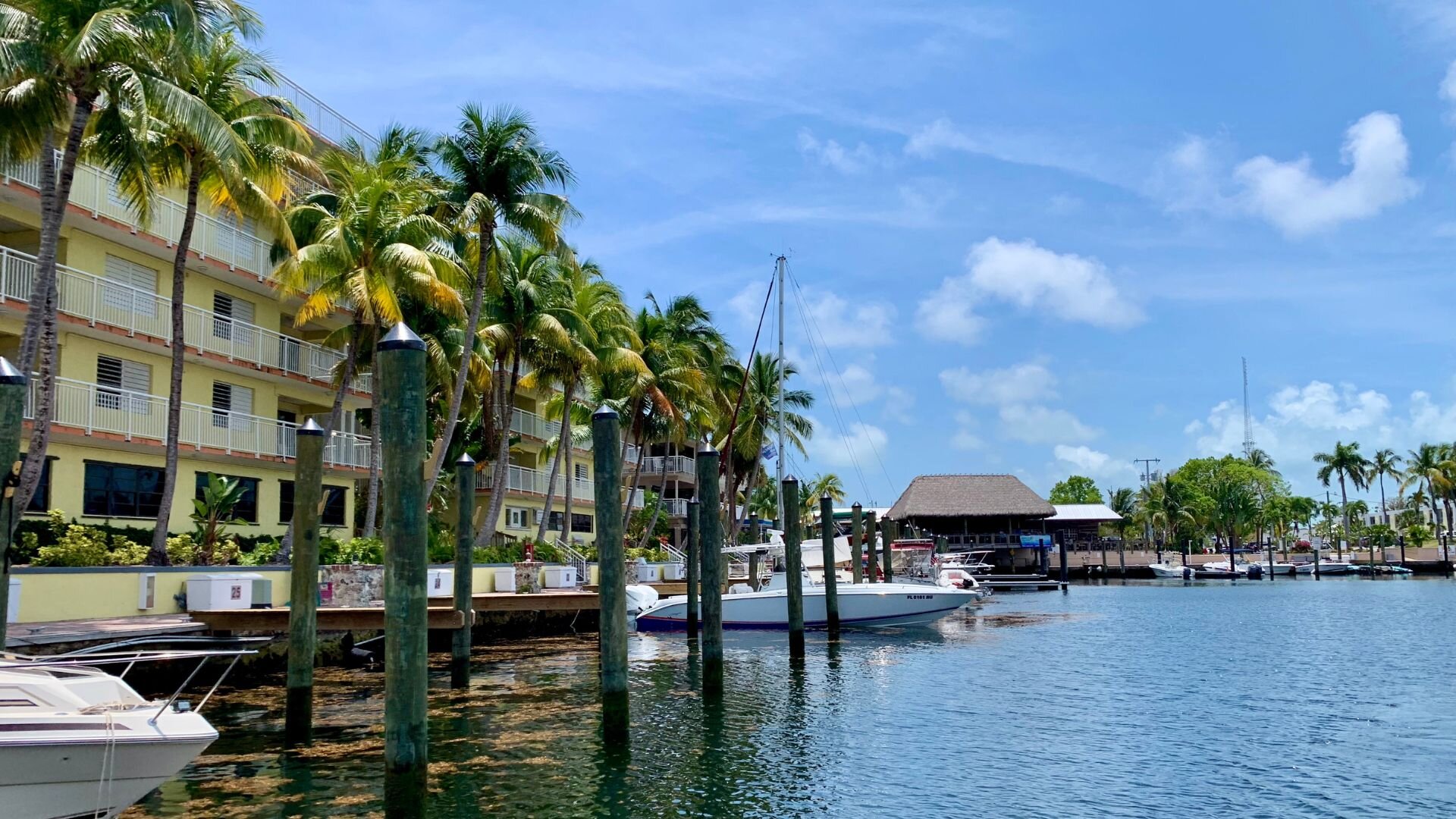
Your homeowners association (HOA) can bill every owner in the building for a repair the master policy doesn't fully cover. That bill is called a special assessment, and it can arrive with no warning. If you have loss assessment coverage on your HO-6 condo policy, it may pay your share of your HOA’s special assessment. Here's what loss assessment coverage pays for, when it applies, how much you may need, and how to file if your HOA issues a special assessment.
Key takeaways
- Loss assessment coverage pays your share of an HOA bill—when the loss behind that bill is something your own HO-6 policy covers
- Special assessments are often triggered by your HOA’s master policy deductible—when a covered loss exceeds your HOA’s master policy deductible, the additional cost is shared by every owner
- Maintenance and upgrades aren't covered—a planned renovation is a capital expense, not a loss
- Flood and earthquake assessments sit outside a standard policy—those need separate flood or earthquake insurance
- Calculate your coverage limit against your share of the master policy deductible—divide that deductible by the number of units in your building
What is condo loss assessment coverage?
Loss assessment coverage is either built into or added on to many HO-6 condo policies. It may help pay your share of a special assessment your HOA charges after a covered loss. For example, when storm damage to the building exceeds the HOA’s master policy limits, or when a large master policy deductible is passed back to unit owners. Without it, that assessment is paid by you and the other condo owners..
Definition in plain English
Think of loss assessment coverage as a safety net for shared costs. Your HOA maintains common areas (the roof, lobby, elevators, pool, parking garage) using dues and reserves. When a covered loss exceeds those reserves or the master policy limits, the HOA divides the remaining cost among unit owners. Your HO-6 loss assessment coverage may pay your share of that bill, up to your policy limit.
How it connects to your HO-6 policy
A standard HO-6 policy covers your personal property, your unit's interior fixtures, and your personal liability. Loss assessment coverage is an additional layer—sometimes built in and sometimes an optional add-on—that extends your protection to cover your share of assessments the HOA levies on all owners after a qualifying event. Not every HO-6 policy includes it by default, so check your declarations page to confirm whether yours does.
What is a condo association loss assessment (and why do they happen)?
A loss assessment is a charge your HOA passes on to unit owners when a covered loss or large repair exceeds the association’s available funds. HOAs typically carry a master insurance policy and maintain a reserve fund, but they don’t always cover the cost of repairs to the building. When costs spill over, the HOA has the authority under most condo association bylaws to bill each unit owner for their proportional share.
Common reasons assessments happen
Assessments can be triggered by several situations. A hurricane or severe storm may damage the building’s roof or exterior walls beyond what the master policy covers. A liability lawsuit (for example, someone is injured in the lobby and wins a judgment that exceeds the HOA’s liability limit) can result in an assessment to cover the gap. Aging infrastructure like elevators, plumbing systems, or parking structures may need expensive emergency repairs that drain reserve funds. A major fire in common areas can also produce costs that exceed policy limits.
The master policy deductible problem
One common source of assessments is your HOA's master policy deductible. Master policy deductibles can run to $25,000, $50,000, or $100,000 per occurrence. When a covered event triggers a large deductible, the HOA splits that cost among all units. In a 50-unit building, a $100,000 deductible works out to $2,000 per owner before any costs above the deductible are added.
What does loss assessment coverage typically pay for?
Loss assessment coverage typically steps in when three conditions are met:
- The HOA has charged all unit owners a share of a loss.
- The loss was caused by something your HO-6 policy covers.
- The amount billed to you exceeds your policy’s deductible.
What your policy covers depends on the insurer and the policy wording.
Covered scenarios
Loss assessment coverage typically covers:
- Your share of damage to common areas from a covered peril—an event your policy insures against, like fire, windstorm, hail, or water damage from a burst pipe in shared plumbing
- Your portion of a liability judgment, when the HOA is held legally responsible for an injury, or property damage that exceeds its liability coverage limits
- Your share of your HOA's master policy deductible after a covered loss
What it typically doesn’t cover
Loss assessment coverage typically doesn’t cover:
- Assessments for routine maintenance, cosmetic upgrades, or planned and budgeted improvements—these are expected costs, not losses from a covered peril
- Assessments for flood damage, unless you separately carry flood coverage that includes loss assessment
- Earthquake-related assessments, which usually fall outside standard coverage as well
- Assessment driven purely by poor financial management or HOA budget shortfalls, when they’re not tied to any loss event
When would you use condo loss assessment coverage? (real-life examples)
Here's how that plays out in three situations.
Scenario 1: Storm damage exceeds master policy limits
A tropical storm causes $800,000 in roof and exterior damage to your 40-unit building. The HOA’s master policy covers $600,000, leaving a $200,000 gap. The HOA assesses each unit equally: $5,000 per owner. If you have $10,000 in loss assessment coverage and your deductible is $500, your policy pays $4,500 (the $5,000 bill minus the $500 deductible), and you cover the $500 deductible.
Scenario 2: Liability judgment against the HOA
A visitor slips in the building lobby and sues the HOA. The court awards $600,000 in damages, but the HOA’s liability coverage cap is $500,000. The remaining $100,000 is assessed equally across 50 units: $2,000 per owner. Your loss assessment coverage may pay this bill, less your deductible, provided the liability loss falls within a peril your policy covers.
Scenario 3: High master policy deductible
Your Florida condo building is insured for $12 million, and the master policy has a 5% hurricane deductible calculated on that insured value, not on the damage. That puts the deductible at $600,000. A hurricane then causes $2 million in exterior damage. The master policy pays $1.4 million, and the HOA splits the $600,000 deductible equally among 30 units: $20,000 each. Ask your insurer what your policy pays toward a master policy deductible specifically. Many policies set a separate, lower cap for it.
How much loss assessment coverage do you need?
Most HO-6 policies offer loss assessment coverage in increments, with common limits of $1,000, $2,500, $5,000, $10,000, $25,000, or $50,000. The right amount depends on your building, location, and the financial health of your HOA.
Factors to consider
Start by reviewing your HOA’s master policy. Look at the limit and the deductible, especially for wind, hail, and hurricane damage if you're in a high-risk region. Divide the deductible by the number of units to estimate your potential per-unit exposure.
Next, check your HOA’s reserve fund. A well-funded reserve is a buffer against large assessments, while an underfunded one increases your risk.
Your building’s age, construction type, and geographic location also matter. An older building in a hurricane or earthquake zone generally carries more assessment risk than newer construction in a low-risk area.
General rule of thumb
A reasonable starting point is your estimated share of the master policy deductible.
Owners in moderate-risk areas often start in the $10,000 to $25,000 range. In high-risk states, or in older buildings with large deductibles, owners tend to look at $50,000.
Ask your insurer what a higher limit adds to your premium before you decide.
Does HO-6 loss assessment coverage cover special assessments?
The answer depends on what triggered the special assessment. The term “special assessment” is used broadly by HOAs and can mean two very different things from an insurance perspective.
Special assessments tied to a covered loss (often covered)
When a special assessment results from a storm, fire, water event, or other peril covered under your HO-6 policy, loss assessment coverage typically applies. For example, if the HOA levies a $4,000 special assessment on each unit to cover storm repair costs not fully paid by the master policy, your loss assessment coverage may reimburse you for that charge.
Special assessments for maintenance or upgrades (typically not covered)
When an HOA levies a special assessment to fund a parking garage renovation, replace aging plumbing, or build a new amenity, that’s a planned capital expense, not a loss from a covered peril. Loss assessment coverage typically doesn't apply in these situations.
How to file a loss assessment coverage claim (step-by-step)
Filing a loss assessment claim involves a few more steps than a typical personal property claim because you need documentation from your HOA as well as your own policy.
1. Get the official assessment notice from your HOA—you need a written document that states the amount assessed to each unit; the cause of the assessment, and the date; request meeting minutes if the HOA voted on the assessment
2.—Request HOA master policy documentation—your insurer will want the HOA’s insurance declarations page, proof that a covered loss occurred, and documentation showing how the master policy responded to the claim
3.Contact your HO-6 insurer to open a claim—call your insurance company or log into your online account. Explain that you received a loss assessment from your HOA and want to file under your loss assessment coverage; have your policy number and the cause of the loss ready
4.Submit all required documents—send your insurer the HOA assessment notice, master policy details, repair estimates or invoices, and proof that you owe or paid the assessment; your adjuster may also request your HOA’s governing documents
5.Work with your adjuster and await the decision—your adjuster will review documents, confirm the loss was covered under your HO-6 policy, and determine whether the assessment qualifies; if approved, payment is issued for the covered amount minus your deductible, up to your coverage limit
FAQs about condo loss assessment coverage
Is loss assessment coverage required for condo owners?
It isn't legally required in most states, and many HOA governing documents don't require it either. However, some mortgage lenders require it as a condition of financing. Even where nobody requires it, without it you pay your share of a covered loss yourself.
Does loss assessment coverage have its own deductible?
Yes, it tyically does. Like other parts of your HO-6 policy, loss assessment coverage is subject to a deductible. The deductible may be separate from your standard policy deductible or the same, so check your policy language. A $500 deductible is common.
Can I add loss assessment coverage if I don't already have it?
In most cases, yes. Contact your HO-6 insurer and ask about adding loss assessment coverage or increasing your existing limit.
Does loss assessment coverage apply to flood or earthquake damage?
Standard HO-6 policies exclude flood and earthquake perils, so loss assessments triggered by those events are typically not covered under a basic policy. Some insurers offer flood endorsements or separate earthquake coverage that may include a loss assessment component.
What if the HOA assessment exceeds my coverage limit?
Your insurer pays up to your policy limit. If the assessment charged to you is $15,000 but your coverage limit is $10,000 and your deductible is $500, your insurer pays $9,500 and you owe the remaining $5,500 out of pocket.
Compare condo insurance quotes with loss assessment in mind
Loss assessment coverage is one of those features that can sit quietly on your policy for years until you need it. If you're comparing policies, check whether loss assessment is included, what the limit is, and which deductible applies.
You can also review condo insurance basics and related costs like homeowners insurance cost to see how the structure of a policy affects what you pay.
Hippo helps make home insurance easy. Through our network of 70+ trusted carriers, we’ll find you a great quote and coverage options available. Get a free quote in about 60 seconds at hippo.com.
This article is for informational purposes only and was compiled from sources not affiliated with Hippo. While we believe this information to be reliable, we do not guarantee its accuracy or completeness. For any insurance-related decision, please consult your licensed insurance producer.