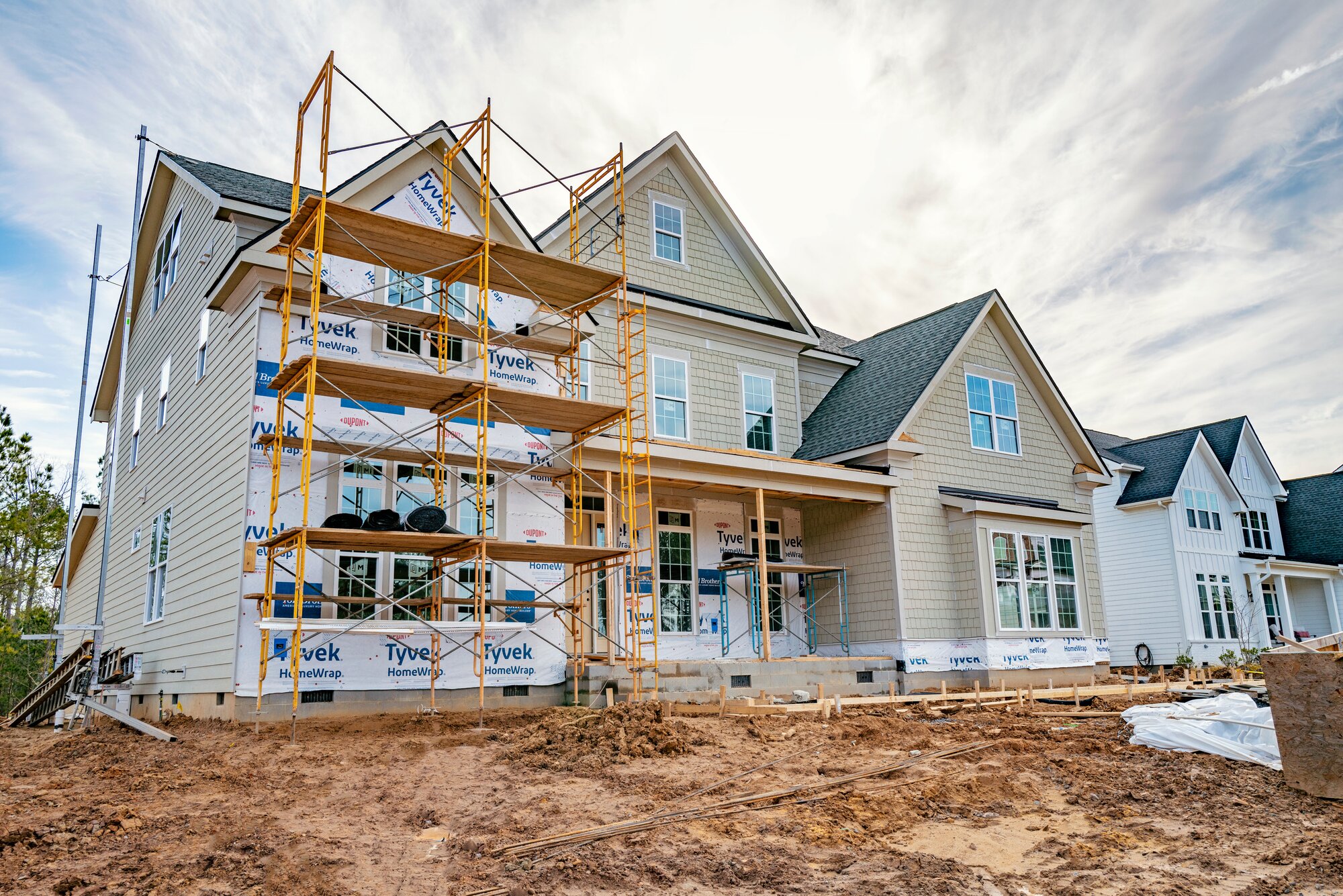
Cutting-edge solutions for fire-safe construction
As wildfires become more frequent and severe, the construction industry is turning to science to build safer, more fire-resistant homes. These innovations offer builders much-needed defense against fire hazards while also promoting sustainability.
From unique structures to unconventional materials, here’s a look at three cutting-edge solutions shaping the future of fire-resilient home design.
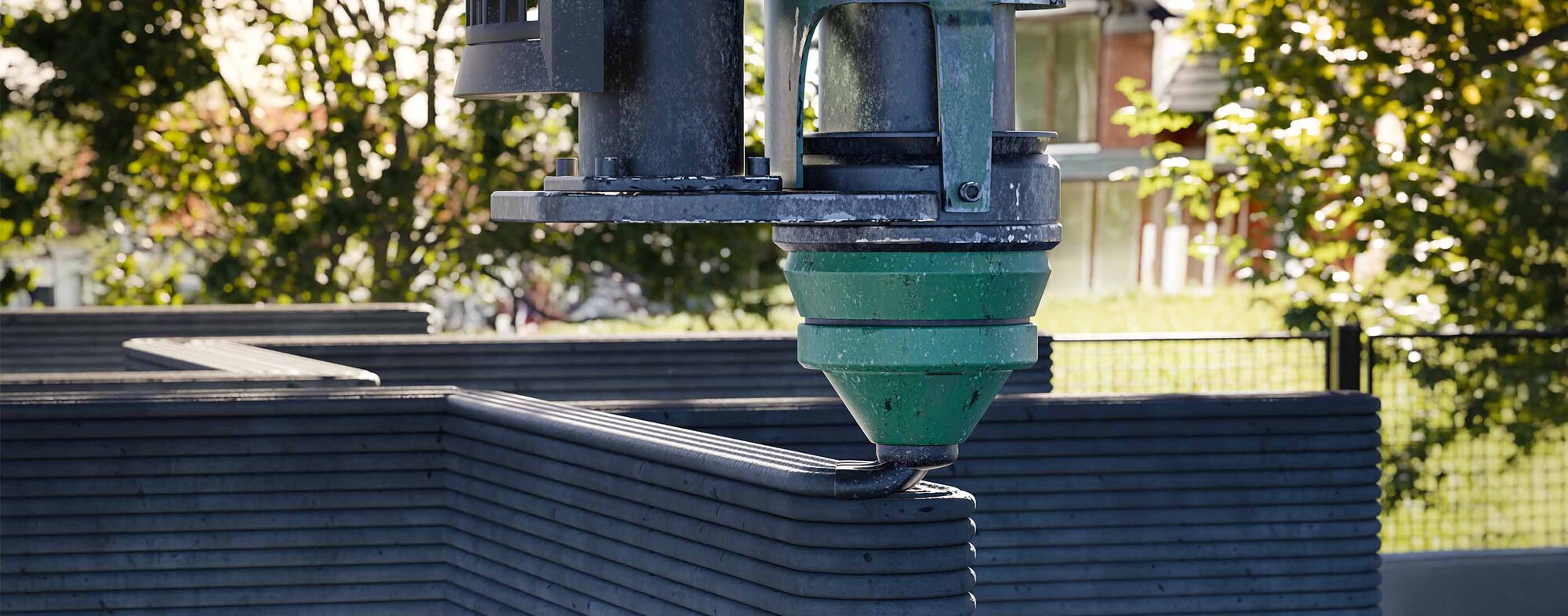
3D-printed homes
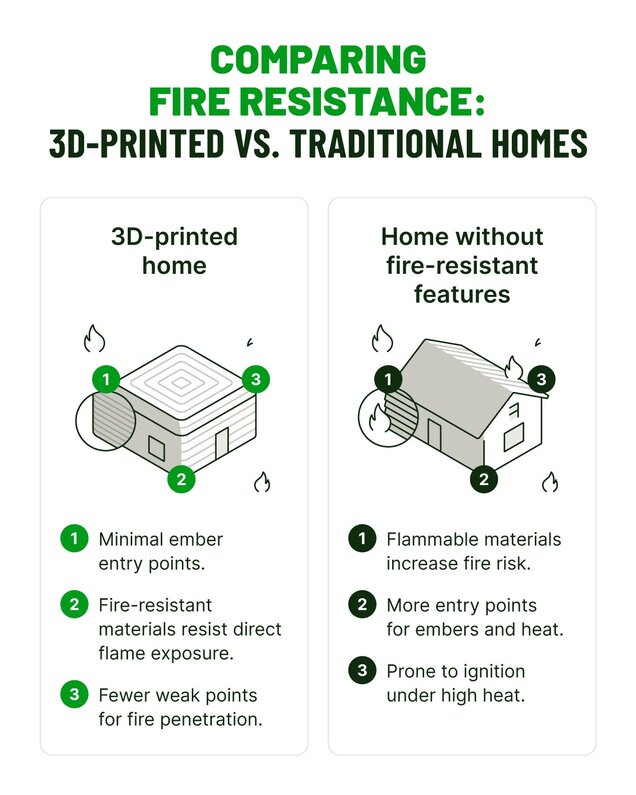
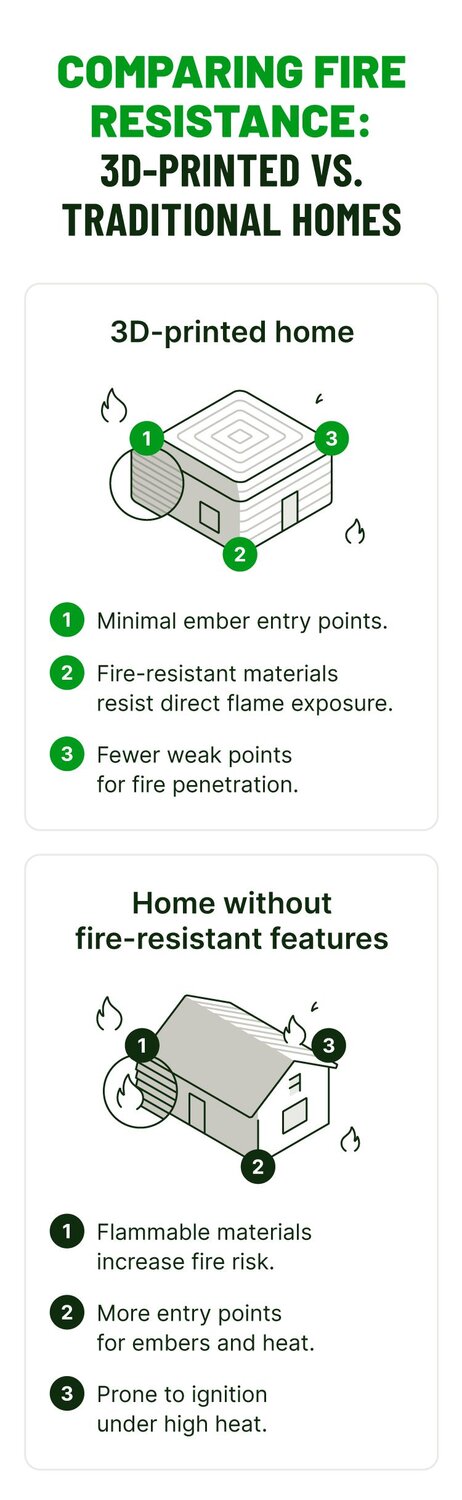
Unlike traditional wood-framed structures, 3D-printed homes can be designed with fewer seams and gaps, minimizing areas vulnerable to embers and heat penetration. Additionally, their structural integrity provides resistance against other hazards like termites and earthquakes, making them a durable and cost-effective solution for fire-prone regions.
Fungi-based building materials
This unorthodox solution harnesses mycelium—the root-like structure of fungi—to create heat-resistant, biodegradable composites. These materials are grown from agricultural waste and offer a sustainable alternative to traditional insulation while maintaining strong fire-retardant properties.
Although still in early development, fungi-based building materials have the potential to be a game-changer, providing builders with an eco-friendly and affordable fire-resistant option in the future.
Nano-enhanced composites
Integrating microscopic nanoparticles into conventional materials like concrete, coatings, and insulation can help enhance fire resistance without adding significant weight. One exciting breakthrough is the use of these coatings to make wood more fire-resistant, addressing one of the biggest vulnerabilities in home construction.
By incorporating nano-clays, graphene oxide, and metal oxides, the coatings form a heat-resistant barrier that helps slow down burning and reduce fire damage. As research advances, these next-generation fire retardants could lead to safer, more sustainable building materials.
Building the future of fire resilience
The increasing threat of wildfires is reshaping the way homes are built. Builders who integrate fire-resistant materials and techniques into their projects could lead the charge in creating safer, more durable communities.
At Hippo, we recognize the importance of climate-resilient construction and offer insurance solutions that consider resilient materials, modern building codes and methods, and community safety features to help homeowners safeguard their investments. Learn more about how Hippo partners with builders to help protect homes.
Related articles
Built to Last: Insights for Designing Fire-Resistant Homes
How To Fireproof Your Home + Fire Safety Checklist

27 U.S. House Fire Statistics + Tips to Help Protect Your Home [2024]

Your Guide to Senior Fire Safety
Building for the Future: How Residential Construction is Adapting to Weather and Climate Change